Skip to content

Making Connections

isee systems blog

Making Connections

  • About
  • More Connections
Search

Multiobjective Optimization

Updated: January 23, 2018January 9, 2018Filed under: Modeling Tips2 Comments

This is the third of a three-part series on calibration and optimization. The first part can be accessed here. The second part can be accessed here.

Sometimes optimizing one objective does not give the best solution, for example, when judgment is needed to determine which solution between many equally optimal solutions is truly the best, given the tradeoffs between them. While it is possible to approximate the tradeoffs by assigning different weights to each objective in a single-objective optimization, it is quite likely this will not find the best solution for your situation. In these cases, it is best to use multiobjective optimization, i.e., optimize for multiple objectives at the same time.

But what does that mean in practice? While I can find the optimal value of each objective, what does it mean to optimize all of them simultaneously? It certainly isn’t true that they will all be at their individual optimums when all are optimized. In fact, when we perform multiobjective optimization, we find a set of solutions that are all optimal according to the following definition of non-dominated:

A solution that outperforms another solution in at least one objective is non-dominated by the other solution.

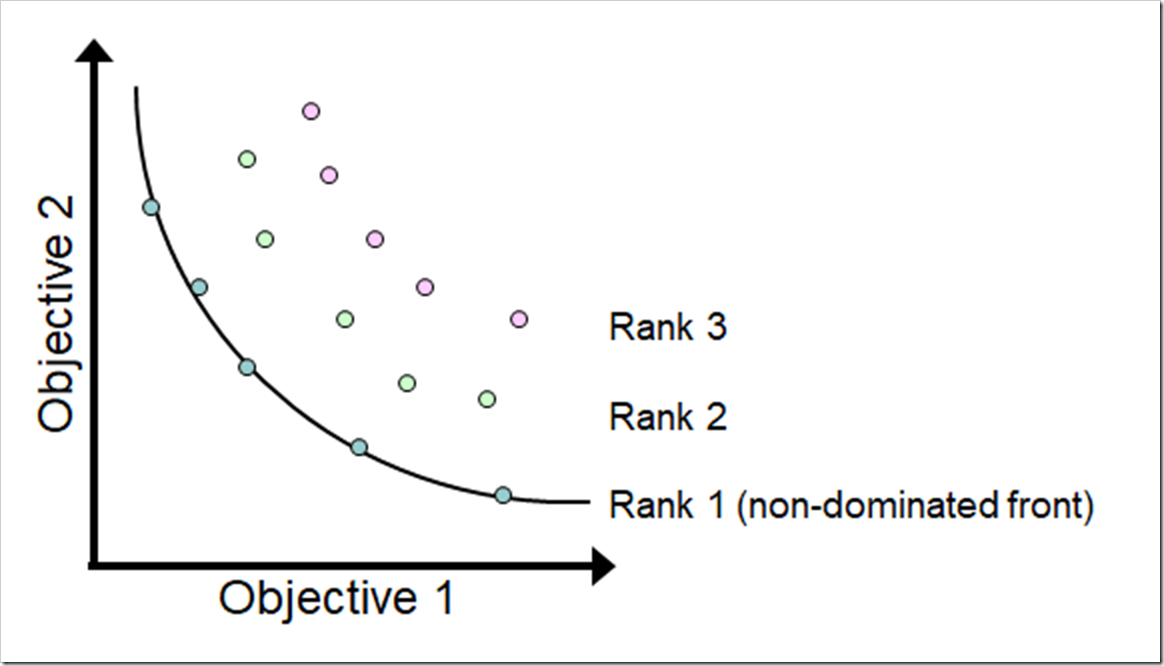
The set of non-dominated solutions in the population are called the non-dominated front.  A non-dominated front (Pareto rank 1) for a minimization problem is shown in the figure below. Note there are also two dominated fronts in the set of solutions (Pareto ranks 2 and 3). The characteristic convex shape clearly shows the tradeoffs between the two objectives with the best compromise landing at the middle of the bend in the curve (called the knee). Beyond the knee in either direction, you experience diminishing returns.
image

The goal of a multiobjective optimization is to push all of these solutions toward the non-dominated Pareto front, which is the ideal set of optimum solutions. Be aware that you cannot be sure – without knowing the Pareto front – that the final set of non-dominated solutions from a multiobjective algorithm reached the Pareto front. However, you can test if running for additional generations improves the set of solutions (i.e., moves closer to the Pareto front).

While it is possible to optimize for many objectives simultaneously, it becomes somewhat impractical to optimize for more than three objectives:  a) as the number of objectives increase, the population size must increase exponentially and the number of generations must increase significantly (the computation time increases combinatorially as the number of objectives increase) and b) it is difficult to visualize the non-dominated fronts when you exceed three dimensions. The discussion in this post will be restricted to two objectives.

The Problem

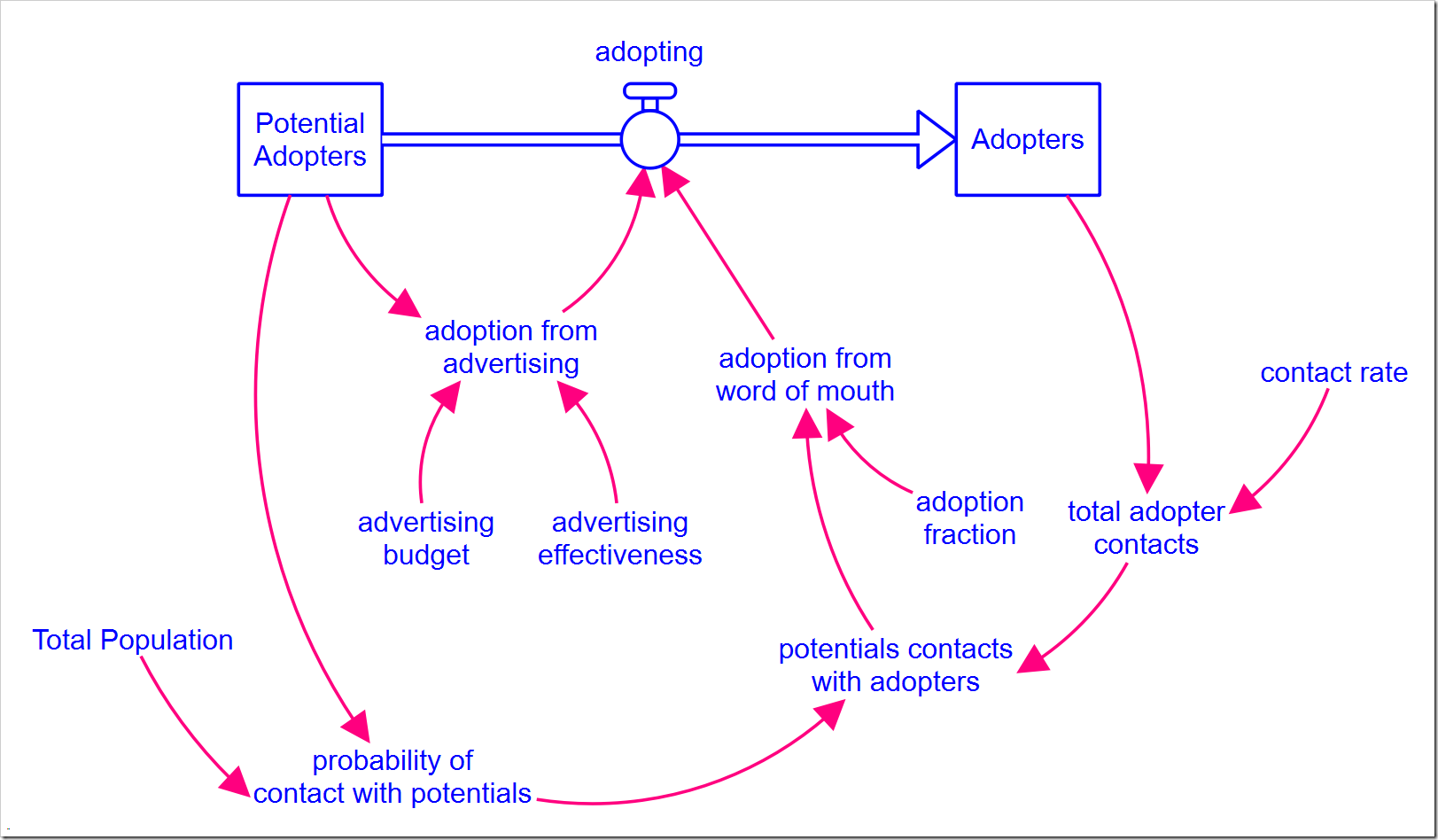
In the Limits to Growth series, we explored the Bass diffusion model. The model is shown again below and can be downloaded here (with all the changes described in this post).
image
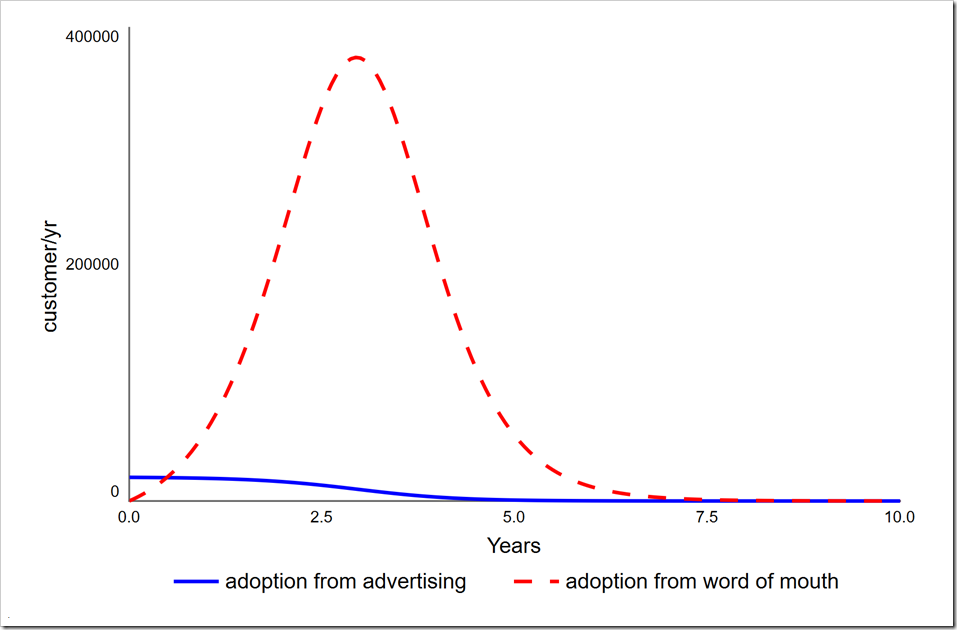
As you may recall, customers are converted by both advertising and word of mouth. In the closing post of that series, I discussed the importance of marketing spend to get the ball rolling. Specifically, without it, growth is very slow. Additionally, as more customers are converted, the word of mouth effect dominates how fast the product is adopted, making the marketing spend less and less effective. By effective, I specifically mean that it results in conversions. The graph below shows the two components of adopting and how the dominance shifts from marketing spend to word of mouth only six months after the product launch.
image

Note how the number of adoptions through advertising decreases over time. This suggest it is not necessary to continue advertising spend at the same level indefinitely. There is perhaps an optimal point where we could start to phase it out. [Warning: This scenario represents the adoption of a single durable good that is never replaced or updated. The situation is clearly different for both consumable goods and durable goods that are regularly replaced.]

If we are launching this unique product, say, the Pet Rock, we would be very interested to know whether we can increase our product lifetime profits by investing less in advertising. We can run an optimization that seeks to maximize conversions and minimize advertising spend over the life of the product.

(more…)

Modeling Tips
  • Bass diffusion
  • calibration
  • data
  • market dynamics
  • optimization
  • Stella
2 Comments

Optimizing Model Performance

Updated: January 9, 2018December 22, 2017Filed under: Modeling Tips2 Comments

This is the second of a three-part series on calibration and optimization. The first part can be accessed here. The third part can be accessed here.

Part one of this series explored calibrating a model using the Stella® Architect/Professional optimization feature (introduced in version 1.5). This post will explore using this same feature for single-objective optimization.

The Challenge

Last year, I explored the Shifting the Burden archetype with the example of using credit card debt to pay current expenses. In that case, adding feedback between expenses and an ability to pay allowed the credit card debt to stabilize. What if we instead wanted to maximize our savings and/or minimize our debt? The original model is shown below for reference and can be downloaded here (with the optimization configurations described below).

Most of these parameters cannot be adjusted by the person trying to control their debt. The interest rate and the minimum payment parameters are set by the credit card company. Let’s assume the income cannot easily be adjusted either, for example, by working overtime or taking on a second job (as we did before). That leaves only the spending rate, which we varied last time, and the minimum bank balance. The latter, you may argue, is set by the bank, but different banks and different bank accounts have different minimums…before they impose a charge. The balance can still fall below the level the bank sets.

We will perform two separate optimizations:  maximize savings (i.e., bank balance) and minimize credit card debt. We should not expect them to give the same results.

(more…)

Modeling Tips
  • calibration
  • data
  • optimization
  • Stella
2 Comments

Calibration in Stella®

Updated: January 9, 2018December 15, 2017Filed under: Modeling Tips3 Comments

This is the first of a three-part series on calibration and optimization. The second part can be accessed here. The third part can be accessed here.

Several years ago, I wrote a post that showed how to calibrate Stella and iThink® models using PEST, a third-party calibration tool (Using PEST to Calibrate Models). Starting with version 1.5, Stella Professional and Stella Architect have optimization built in. Since calibration is a special case of optimization, we can also use this feature to calibrate models (but stay tuned: calibration will be added as its own feature in the not too distant future). Let’s review the problem that was calibrated using PEST in that post and then configure the optimization to calibrate it within Stella.

The Model

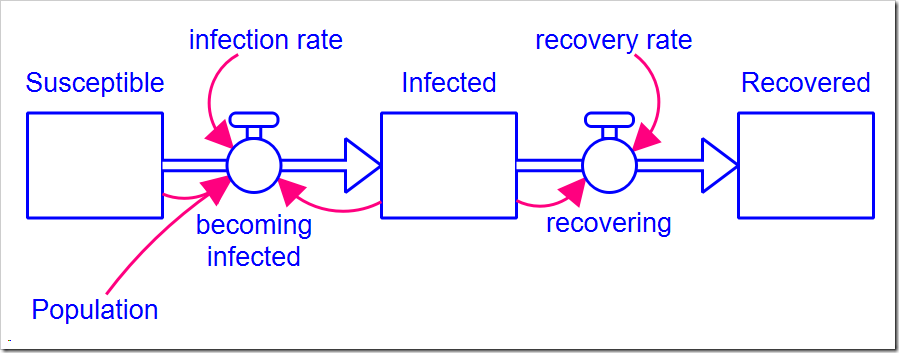
The model is a simple SIR model first presented in my blog post Limits to Growth and shown below (this version with all the optimization settings can be downloaded here). There are two parameters: infection rate and recovery rate. The Population size and the initial number of Infected people are also model parameters, but do not need to be calibrated (presumably, we know the population and the data tells us the initial number of infected people).

image

The Data Set

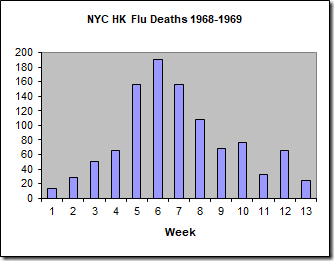
We will calibrate this model to the data set of the number of weekly deaths caused by the Hong Kong flu in New York City over the winter of 1968-1969 (below).

HK Flu Deaths

Here, I am using the number of deaths as a proxy for the number of people infected, which we do not know. This is reasonable because the number of deaths is directly proportional to the number of infected individuals. For this specific outbreak, less than 0.5% of infected people died, so we could multiply these numbers by 200 (1/0.005) to approximate the number of people infected. As I did not do this for the PEST calibration and wish to compare the results, I will not do this here either.

(more…)

Modeling Tips
  • calibration
  • data
  • h1n1
  • optimization
  • Stella
3 Comments

Posts pagination

  • Previous
  • 1
  • 2
  • 3
  • 4
  • 5
  • …
  • 29
  • Next

Categories

  • Education (4)
  • isee NetSim (3)
  • isee.NET Framework (1)
  • Modeling Tips (32)
  • News & Announcements (17)
  • STELLA & iThink (15)
  • Stories from the Field (5)
  • Systems Thinking (8)
  • Training (6)

Archives

Browse by keyword

2D array archetypes arrays Barry Richmond Bass diffusion builtins calibration Causal Loop CLD command line conferences crisis data diffusion Education environment export game graphical function h1n1 healthcare housing import iThink/STELLA market dynamics MODSIM modules mortgage netsim optimization Physics policy price releases scholarship software spatial Stella storytelling System Dynamics Society Systems Thinking Version 9.1.2 video webinar workshop

Recent Posts

  • Merlin: Extending the Craft for Experienced System Dynamics Modelers in Stella® Architect 4.3 July 1, 2026
  • Socrates: Lowering the Barrier for Newcomers to System Dynamics in Stella® Architect 4.3 June 18, 2026
  • COVID-19: Modeling Distributions of Incubation and Recovery Times April 1, 2020
  • Multiobjective Optimization January 9, 2018
  • Optimizing Model Performance December 22, 2017

RSS System Dynamics Forum

Recent Comments

  • best apps review on About
  • digital software on Modeling the Economic Crisis
  • Mishawaka Indiana on What are “Mental Models”?
  • La Paz Indiana on XMILE – An open standard for system dynamics models
  • Bristol Indiana on Modeling the Economic Crisis

Meta

  • Log in
  • Entries feed
  • Comments feed
  • WordPress.org
Products
Software (v1.3)
  • Stella Architect
  • Stella Professional
  • Stella Designer
  • Stella Simulator
  • iThink
  • Feature Updates
  • Policies
  • Publishing Options
  • License Agreement
Free Software
  • Stella Online
  • isee Player
  • Stella Architect Trial
Solutions
Consulting
  • Systems Innovation Practice
Common Applications
  • Business
  • Education
  • Research
  • Government
  • Energy
  • Health
  • Agriculture
  • Manufacturing
  • Conservation
Quick Links
About
  • isee systems
  • Systems Thinking
  • Barry Richmond Scholarship
Resources
  • Frequently Asked Questions
  • Product Help
  • Examples
  • Request Support
  • Request Quote
  • Systems in Focus
  • Quick Tips
  • Legacy Tutorials
News and Events
Upcoming Workshops
  • Introduction to Dynamic Modeling
  • Whole Systems Partnership
Newsletter
  • The Connector
Recent Webinars
  • Model Mysteries
Recent Training
  • Systems Thinking Practice
Press Release
  • Stella Architect Release

  Phone: (603) 448-4990   Email: info@iseesystems.com

   Monday - Friday: 9:00 am - 5:00 pm EDT | Saturday - Sunday: Closed
Wheelock Office Park | 31 Old Etna Rd, Suite 7N | Lebanon, NH 03766 | US

isee systems inc. holds registered trademark rights over the following: iThink®, STELLA®, Stella®, isee systems® and claims the following trademarks; isee NetSim™, Stella Live™, Causal Lens™ and Stella Online™.

Terms of Use

© 2017. isee systems inc . All rights reserved.